Every file here has an incident, a hidden cost, an intervention, a result, a payback period, and what the AI didn't do. We're looking for the first client in each sector to be measured in public, with the method in the open.
The demos are tools we built so you can see the mechanism for yourself.
Open files
Ten sectors you wouldn't expect.
One reel for one e-shop is one story. Here are ten more, from the weighbridge of a scrap yard to the tsikoudia still. For each: what happens, what it costs, what we'd build, what we'd measure, and what the AI wouldn't do.
Ten use cases, written on the same Black Box form as our projects. Volumes and minutes are an example of the calculation, in plain view; the hourly cost is official Eurostat data. Client projects carry the "real project" label.
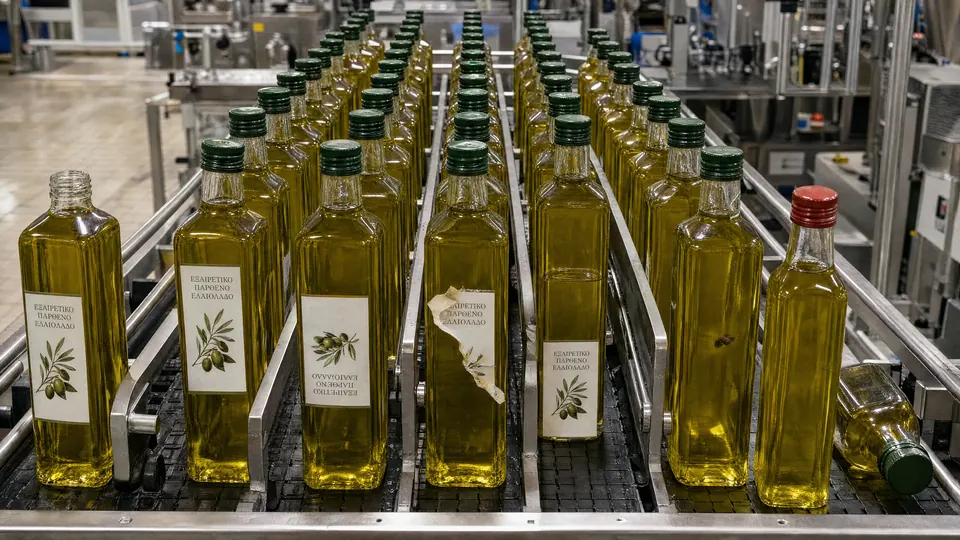
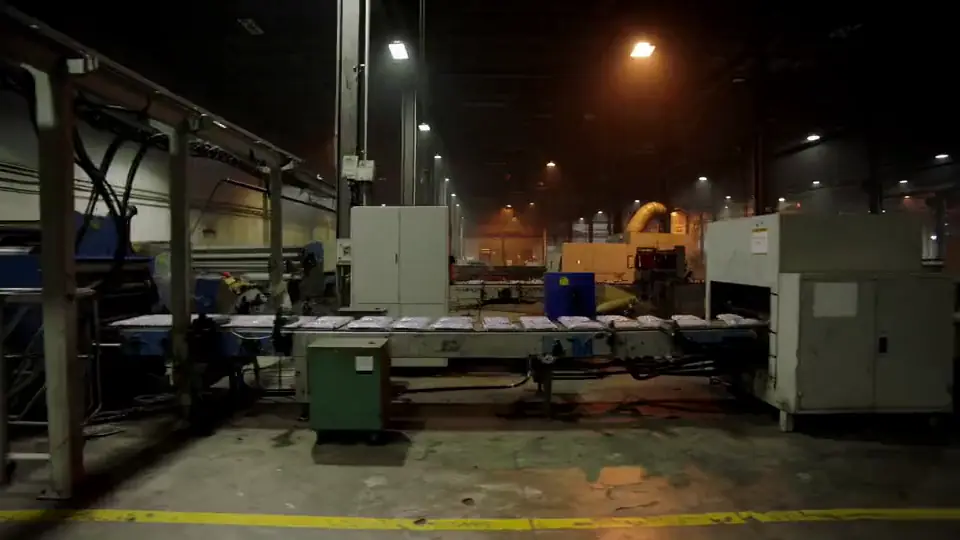
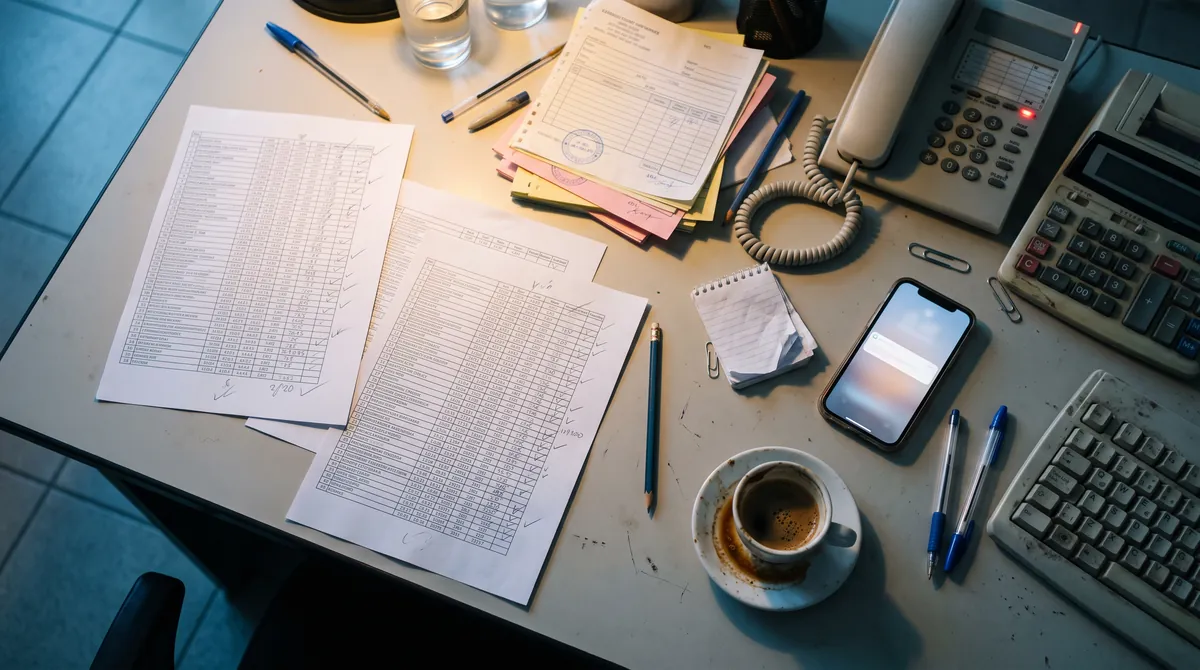
Drawings are drawings. Photographs on this site are of real places, or carry the "AI-generated image" label.
Black Box · File f01Scrap metal yard · AlmyrosHow we'd apply it in a given trade, written on the same form, with numbers from public sources and assumptions in plain view.
BeforeAfter
Before and afterWith less motion on, the two drawings sit side by side.
Grading scrap by eye.
The grade gets called by eye, at the weighbridge, with the truck waiting. Then we write it down by hand.
What would disappear The handwritten ticket, and typing it all into the ERP in the afternoon.
IncidentThe problem, in an owner's words, as they'd put it.
A yard that buys scrap from garages, demolition jobs and small collectors and sells it to the steel mills nearby. Every load is weighed, the grader looks into the truck bed and calls a grade, and the ticket is written by hand. In the afternoon someone types it all into the ERP and prepares the transport paperwork. When a supplier disputes the grade, there's no photo for anyone to look at.
Hidden cost
≈ €13,200–16,800 a year, in hours alone
The formula 660 loads a month × 5.5–7 fewer minutes of paperwork per load ÷ 60 ≈ 60–77 hours a month. × 12 × €18.2 an hour ≈ €13,200–16,800 a year.
Assumptions 30 loads a day, 22 working days. About 9 minutes of paperwork per load today: ticket, ERP, transport documents. After: 2 to 3.5 minutes, human check included.
Average labour cost €18.2/hour (industry, construction and services): Eurostat lc_lci_lev, 2025 · official statistics. Volumes and minutes: example calculation.
The bigger cost isn't the hours. It's the wrong grade at the weighbridge, whichever way it tips. That can only be measured on site.
What we'd build
A camera at the tipping point: three photos per load, tied to the ticket.
A vision model suggests a grade with a confidence score, trained on your own graders' photos and decisions.
A flag for anything that mustn't reach the furnace: sealed containers, plastics, rubble.
The weight comes straight from the weighbridge; the ticket and transport documents fill themselves in.
The supplier gets a digital ticket with the photos, and the ERP entry happens at the same moment.
Result
In a pilot we'd measure: minutes per load, weighbridge to ERP · truck waiting time · grade disputes a month · how often the grader agrees with the model's suggestion
Payback
Worked out after the X-Ray as pilot cost ÷ net monthly benefit, once human review time is subtracted. Pilots from €6,000.
What the AI wouldn't do
It doesn't decide the grade or the price: it suggests, and the grader decides. It can't see below the top of the load; whatever's hidden underneath, the person at the tipping point sees.
The person in the loopA role, not a person: use cases don't get names.
The grader at the weighbridge. Instead of writing, they look: at the loads the model flagged, and at anything that mustn't reach the furnace.
How we'd measure
Two weeks of baseline before anything else: a stopwatch from weighbridge to ERP, and a count of disputes. Then four weeks of pilot, the model suggesting without deciding, every suggestion logged next to the grader's decision.
Why we believe it
Watch a vision model work in front of you, mistakes included.
The camera looks at the truck bed, not the driver. Signage at the gate and notice to staff and suppliers (GDPR). Photos are kept only as long as the retention policy says.
Black Box · File f02Marble yard · 400 slabsHow we'd apply it in a given trade, written on the same form, with numbers from public sources and assumptions in plain view.
BeforeAfter
Before and afterWith less motion on, the two drawings sit side by side.
Every slab is unique. The catalogue isn't.
The architect wants to see that exact slab. We send a phone photo, taken in the sun.
What would disappear Phone photos with the sun glaring off them, and the slab somebody promised twice.
IncidentThe problem, in an owner's words, as they'd put it.
Four hundred slabs in the yard, each with its own veining. Clients choose from phone photos full of reflections, sizes are written in marker on the edge, and the same slab gets held for two clients because nobody wrote it down. A crack shows up once the slab is already on the truck.
Hidden cost
≈ €7,000 a year in hours
The formula Today: 40 "send me a photo" requests a week × 15 minutes in the yard ≈ 43 hours a month. After: 2 minutes per request to send a link, plus 5 minutes of photography for each of the month's 60 new slabs ≈ 11 hours. That gives back ≈ 32 hours a month: × 12 × €18.2 an hour ≈ €7,000 a year.
Assumptions 40 requests a week, 60 new slabs a month. Photographing at intake is new work, and it's subtracted from the benefit.
Average labour cost €18.2/hour (industry, construction and services): Eurostat lc_lci_lev, 2025 · official statistics. Volumes and minutes: example calculation.
The costly part isn't the hours. It's the slab held for two clients, and the crack spotted on the truck.
What we'd build
Every new slab is photographed once, at intake, at a fixed spot under fixed lighting, with a scale bar in frame.
A vision model reads the size from the scale bar, suggests colour and vein type, and flags possible cracks for a person to look at.
A web catalogue, slab by slab, filterable by colour, thickness and size. Architects see the actual slab, not a sample.
One-click holds with an expiry date: a slab can never be held twice.
At loading, the slab's QR is scanned and matched to the order.
Result
In a pilot we'd measure: yard hours on photos and searches · slabs held twice · cancellations and returns over cracks · time from enquiry to hold
Payback
Worked out after the X-Ray as pilot cost ÷ net monthly benefit, once human review time is subtracted. Pilots from €6,000.
What the AI wouldn't do
It doesn't certify a slab as crack-free: it flags possible cracks, and a person checks them. It doesn't grade quality or set a price. It doesn't beautify photos: what the client sees is what the client gets.
The person in the loopA role, not a person: use cases don't get names.
The yard manager, who stops running between slabs with a phone and checks only what the model flagged.
How we'd measure
Three weeks of baseline: photo requests, time in the yard, double holds, returns. Then every slab photographed once, and two months with the catalogue open to selected architects, measured the same way. Cracks the model flags are logged next to the ones the person finds.
Why we believe it
In manufacturing, 7.77% of Greek firms with 10+ staff use AI. In the EU, 17.27% (2025).
Eurostat isoc_eb_ain2Figures from an official statistics body, with the year shown.
Rules & limits
The photos show slabs, not people. Holds and client details stay in your own system. The lighting at the photo spot doesn't change, or the model can't compare properly.
Black Box · File f03Fish farm · 18 cagesHow we'd apply it in a given trade, written on the same form, with numbers from public sources and assumptions in plain view.
BeforeAfter
Before and afterWith less motion on, the two drawings sit side by side.
The most expensive notebook on the farm.
Feed is our biggest bill. And we log it in a wet notebook on the boat.
What would disappear The wet notebook, and copying it into Excel on Friday.
IncidentThe problem, in an owner's words, as they'd put it.
Every morning the feeding boat works its way round eighteen cages of sea bream and sea bass. How much feed went into which cage, only the skipper and the notebook know. The office finds out on Friday, if the handwriting is legible, and the feed conversion ratio comes out once per batch, when it's too late to change anything.
Hidden cost
We won't put a number on it before we've seen your notebooks.
The formula Feed conversion ratio (FCR) = kg of feed ÷ kg of fish growth, per cage, per week.
Assumptions There's no reliable public figure for a farm like yours. We'll measure it.
use case
Here the hidden cost isn't hours. It's feed that ends up on the seabed instead of becoming fish, and nobody can say in which cage.
What we'd build
An app on the boat's phone that works with no signal and syncs back on land: cage, feed type, kilos, in three taps.
Water temperature and oxygen from the sensors you already have, or logged by hand in the same app.
A weekly weight sample, in the same app.
A model estimates the expected feed per cage from temperature and biomass, and flags the cages that drift.
The production manager approves the next day's feeding plan.
Result
In a pilot we'd measure: FCR per cage per week · feed per cage against the estimate · office hours for the weekly report · mortality per cage
Payback
Worked out after the X-Ray as pilot cost ÷ net monthly benefit, once human review time is subtracted. Pilots from €6,000.
What the AI wouldn't do
It doesn't feed and doesn't decide how much. It can't see under water: we don't promise cameras that count fish. It doesn't diagnose disease; that's the job of the fish biologist and the vet.
The person in the loopA role, not a person: use cases don't get names.
The feeding boat's skipper, who writes less and, for the first time, sees what became of the cage they fed.
How we'd measure
Four weeks with the app but no model, to set a baseline. Then six weeks with a per-cage estimate, comparing FCR between cages that followed it and cages that didn't.
Why we believe it
Only 1.88% of Greek firms with 10+ staff use AI in production. In the EU, 4.14% (2025).
Eurostat isoc_eb_aiFigures from an official statistics body, with the year shown.
Rules & limits
The farm's data stays the farm's. No feeding suggestion is applied without approval, and none concerns treatment.
Black Box · File f04Ship chandler · Port of VolosHow we'd apply it in a given trade, written on the same form, with numbers from public sources and assumptions in plain view.
BeforeAfter
Before and afterWith less motion on, the two drawings sit side by side.
The ship won't wait for the quote.
The ship berths at 06:00 and sails at 22:00. Its list runs to 140 lines in English.
What would disappear Matching line by line, with the catalogue open in the next window.
IncidentThe problem, in an owner's words, as they'd put it.
Requests come from agents and masters by email, PDF and spreadsheet: ropes, filters, paint, provisions, with IMPA codes if we're lucky. Someone matches them line by line to our own codes and stock before the quote goes out. If it's late, the ship buys at the next port.
Hidden cost
≈ €5,600 a year in hours. The expensive part is elsewhere.
The formula 25 requests a month × (90 minutes today − 20 minutes with a check) ÷ 60 ≈ 29 hours a month. × 12 × €16.0 an hour ≈ €5,600 a year.
Assumptions Roughly one request per working day, 80 to 200 lines each. The 20 minutes "after" are a person checking the flagged lines.
Average labour cost €16.0/hour in trade: Eurostat lc_lci_lev, 2025 · official statistics. Volumes and minutes: example calculation.
The hours are the small number. The big one is the quote that arrives second: the ship doesn't wait.
What we'd build
AI reads the request in whatever format it arrives and splits it into lines: item, unit, quantity.
It matches each line to your own code, stock and supplier price, using the IMPA code where there is one.
Anything it can't match with confidence, or that needs a substitute, is flagged for a person.
The quote goes out as a PDF, in the language of the request.
On acceptance: a picking list, a delivery note and an invoice from the ERP.
Result
In a pilot we'd measure: time from email to quote · lines matched with no correction · quotes won
Payback
Worked out after the X-Ray as pilot cost ÷ net monthly benefit, once human review time is subtracted. Pilots from €6,000.
What the AI wouldn't do
It doesn't set prices, discounts or credit. It doesn't pick a substitute on its own. And nothing goes to the ship without approval.
The person in the loopA role, not a person: use cases don't get names.
The sales lead, who checks ten flagged lines instead of a hundred and forty.
How we'd measure
The last ten requests, timed as they were handled, as the baseline. Then the next twenty through the system, with every correction the salesperson makes logged.
Why we believe it
At a US logistics-tech firm, preparing a quote with AI went from more than 30 minutes to 3 or fewer.
ToptalA figure published by a company that sells the solution. We show it, but with this label.
Rules & limits
Ship and agent data stays in your ERP. Anything involving dangerous goods or safety-critical spares is always checked by a person.
Black Box · File f05Villa management · ChaniaHow we'd apply it in a given trade, written on the same form, with numbers from public sources and assumptions in plain view.
BeforeAfter
Before and afterWith less motion on, the two drawings sit side by side.
Saturday, 10:00 to 16:00.
Saturday: 34 departures at 10:00, 34 arrivals at 16:00. I build the plan on Friday night, on a whiteboard.
What would disappear Friday's whiteboard, and Saturday's group chats.
IncidentThe problem, in an owner's words, as they'd put it.
Eight cleaning teams, sixty villas across three municipalities, bookings from three platforms. Changes arrive in group chats, damage is reported with photos that get lost in the chat, and the owner abroad hears about the broken glass from the review.
Hidden cost
≈ €5,200 a season in hours
The formula 4 hours of planning on Friday + 5 hours of calls on Saturday + 34 reports × 10 minutes ≈ 15 hours a week. With the system, about 4 remain. That gives back ≈ 48 hours a month in season: × 6 months × €18.2 an hour ≈ €5,200 a season.
Assumptions One big changeover a week, on Saturday, 34 villas, a six-month season. The 4 hours "after" are plan approval and exceptions.
Average labour cost €18.2/hour (industry, construction and services): Eurostat lc_lci_lev, 2025 · official statistics. Volumes and minutes: example calculation.
The costly part isn't the hours. It's the villa that isn't ready at 16:00, and the review that follows.
What we'd build
The booking platforms' calendars are read automatically.
Saturday's plan is proposed automatically: teams, routes, time windows, linen loads. You adjust it and approve it.
Every team has a phone app with a checklist and required photos, room by room.
Damage? A report with photos goes to the owner the same day, in their language.
A board shows which villa is ready, so a request for early check-in gets an answer based on facts.
Result
In a pilot we'd measure: villas ready before arrival time · coordination calls on Saturday · same-day damage reports with photos · cleanliness complaints
Payback
Worked out after the X-Ray as pilot cost ÷ net monthly benefit, once human review time is subtracted. Pilots from €6,000.
What the AI wouldn't do
It doesn't talk to guests and doesn't decide damage charges. It doesn't change the plan on its own: it proposes, you approve. Cleaning quality is judged by a person, with the photos in front of them.
The person in the loopA role, not a person: use cases don't get names.
The operations lead, whose Friday no longer ends at midnight.
How we'd measure
Two Saturdays of baseline: which villa was ready when, how many calls were made, how many damages were reported. Then six Saturdays with the system, measured the same way.
Why we believe it
Saturday changeovers are a scheduling problem with fixed rules: times, distances, teams. Optimisation algorithms handle that kind of problem well; the person keeps the exceptions.
our reasoning
Rules & limits
Guest data stays on the platforms and in the booking system; teams see only what they need. Photos don't show faces or guests' belongings.
Black Box · File f06Print shop · VolosHow we'd apply it in a given trade, written on the same form, with numbers from public sources and assumptions in plain view.
BeforeAfter
Before and afterWith less motion on, the two drawings sit side by side.
Six variables and a calculator.
Every quote has six variables. I work it out on a calculator, between two presses.
What would disappear The calculator between the presses, and the "same as last time" phone call.
IncidentThe problem, in an owner's words, as they'd put it.
Labels for food producers, leaflets, boxes. Requests come by phone and email, and half are repeats of old jobs. Artwork often arrives without bleed, at low resolution or in RGB, and we find out once the press is already set up.
Hidden cost
≈ €8,200–9,800 a year in hours
The formula 300 requests a month × 15 minutes = 75 hours. If 50 to 60% are standard jobs or repeats that clients complete themselves, that gives back 37–45 hours a month: × 12 × €18.2 an hour ≈ €8,200–9,800 a year.
Assumptions Roughly 14 requests per working day. The share that completes on its own is an assumption; it gets measured in the first month. Portal orders need no quote; the pre-press check already happens today and doesn't change.
Average labour cost €18.2/hour (industry, construction and services): Eurostat lc_lci_lev, 2025 · official statistics. Volumes and minutes: example calculation.
Not counting the printing plates remade because one file had no bleed.
What we'd build
A B2B portal on WooCommerce: each client sees their own price list.
A product configurator: stock, size, quantity, colours, finish, delivery time. The price comes from your own cost formula.
Repeat an old job in two clicks.
Automatic artwork check on upload: resolution, bleed, colour mode, fonts.
The order goes to the production board, and the invoice to the ERP and the e-invoicing provider. Anything non-standard goes to a person for a quote.
Result
In a pilot we'd measure: requests completed with no phone call · time to quote for non-standard jobs · files rejected at upload rather than at the press · repeat orders
Payback
Worked out after the X-Ray as pilot cost ÷ net monthly benefit, once human review time is subtracted. Pilots from €6,000.
What the AI wouldn't do
It doesn't set the price: the price comes from your formula, not from a model. The artwork check is rules, not guesswork. AI is barely needed here, and we say so.
The person in the loopA role, not a person: use cases don't get names.
The owner, who now only sees the interesting quotes: the new ones.
How we'd measure
A month of baseline: each request with arrival time, quote time and whether it was won. Then three months with the portal open to the most frequent customers.
Why we believe it
From 1 February 2027, documents reach myDATA only through a certified provider or AADE's own apps, no longer directly from an ERP. A portal that already talks to a provider is ready.
according to AADE (30/9/2026)An announcement by a public authority, such as AADE, with its date.
Rules & limits
Each client sees only their own prices and jobs. Their files are used for nothing else.
Black Box · File f07Aluminium windows and doors · HeraklionHow we'd apply it in a given trade, written on the same form, with numbers from public sources and assumptions in plain view.
BeforeAfter
Before and afterWith less motion on, the two drawings sit side by side.
Six-metre bars, and their offcuts.
The architect sends a window schedule as a PDF. We copy it out by hand, and the craftsman plans the cuts by eye.
What would disappear Copying out the schedule by hand, and the offcut bin nobody weighs.
IncidentThe problem, in an owner's words, as they'd put it.
A workshop making aluminium windows and doors for apartment blocks and hotels. Every project brings a schedule with dozens of openings: type, size, opening direction, glazing. The quote takes days, and in the workshop profiles get cut in whatever order they come, leaving offcuts that end up in the bin.
Hidden cost
≈ €7,900 a year in hours, plus the offcuts
The formula Two parts. First, the hours: 12 quotes a month × 4 hours of copying and calculating = 48 hours; with the schedule read automatically and checked by a person, about 1 hour per quote remains, so ≈ 36 hours a month come back: × 12 × €18.2 an hour ≈ €7,900 a year. Second, the offcuts: kilos of aluminium in the bin each month, before and after cutting optimisation.
Assumptions 12 quotes a month, with 20 to 60 openings each. We don't estimate the offcuts: we weigh them.
Average labour cost €18.2/hour (industry, construction and services): Eurostat lc_lci_lev, 2025 · official statistics. Volumes and minutes: example calculation.
Offcuts are the cost that never shows in the quote but always shows in the bin.
What we'd build
AI reads the window schedule from PDF or spreadsheet: type, size, opening direction and glazing, for every opening.
Anything it can't read cleanly, or that doesn't match a system you make, is flagged for a person.
The openings become profile pieces, and a cutting-optimisation algorithm packs them into 6-metre bars with the least offcut.
The quote comes from your own prices, with quantities of profiles, glazing and hardware.
In the workshop, a cut list per bar on a tablet next to the saw.
Result
In a pilot we'd measure: hours per quote · kilos of offcuts a month · quotes won · dimension errors that reached the site
Payback
Worked out after the X-Ray as pilot cost ÷ net monthly benefit, once human review time is subtracted. Pilots from €6,000.
What the AI wouldn't do
It doesn't measure on site or correct the architect's drawings. It doesn't change your prices. And the cutting optimisation isn't even AI: it's decades-old maths, and we use it because it works.
The person in the loopA role, not a person: use cases don't get names.
The craftsman at the saw, who cuts in the order the computer worked out and keeps the right to change it.
How we'd measure
Two months of baseline: hours per quote, and kilos of offcuts from the bin, weighed every Friday. Then three months measured the same way. Every correction to the schedule the AI read gets logged.
Why we believe it
A window schedule is a document with a fixed structure, and cutting into bars is a classic optimisation problem. Both are solved well, as long as a person keeps the exceptions.
our reasoning
Rules & limits
Dimensions are always confirmed by an on-site measurement before cutting. Architects' drawings are used only for their own project.
Black Box · File f08Tsikoudia distillery · CreteHow we'd apply it in a given trade, written on the same form, with numbers from public sources and assumptions in plain view.
BeforeAfter
Before and afterWith less motion on, the two drawings sit side by side.
The best story, two months late.
In October we fire up the stills. People find out in December, from the photos.
What would disappear December's photos of something that happened in October.
IncidentThe problem, in an owner's words, as they'd put it.
The year's strongest story happens over a few weeks in autumn, in front of very few people. Cretans abroad, the tavernas that buy from us and autumn visitors see it, if at all, once it's over.
Hidden cost
We don't put a price on a story. We measure what it does.
The formula There's no formula in euros. There's a question: how many people would have wanted to be there, or to own a bottle from that night, and never found out?
Assumptions
use case
Here the hidden cost isn't hours. It's a story that happens once a year, and nobody sees it while it's happening.
What we'd build
One button on the distiller's phone: "lit".
A "The stills" page on the site shows live which still is running, since when, and which batch.
An alert to everyone signed up to the distillery's channel, and a story: "The second still goes on at 18:00 tonight."
The first bottles of each batch are numbered, with the date and hour of distilling on the label, and pre-sold in the e-shop to adults only.
The tavernas we supply get ready-made material for their own accounts: "from our still, batch 3".
Result
In a pilot we'd measure: channel sign-ups · page visits on still nights · pre-orders of numbered bottles · tavern orders after the season
Payback
Worked out after the X-Ray as pilot cost ÷ net monthly benefit, once human review time is subtracted. Pilots from €6,000.
What the AI wouldn't do
Nothing. This mechanism doesn't need AI. It needs a button, a channel and a numbered label. We say so, because diagnosis cuts both ways.
The person in the loopA role, not a person: use cases don't get names.
The distiller. The button is theirs to press, not an algorithm's.
How we'd measure
We measure the season: sign-ups, visits on still nights, pre-orders and tavern orders, against the same period last year from your own records.
Why we believe it
What's scarce, we want more: scarcity makes a thing more desirable.
Worchel et al., 1975A published scientific study.
Rules & limits
Adults only: an 18+ audience on every ad, age checks in the e-shop and on delivery. No message encourages excessive drinking. The rules on alcohol advertising, distilling licences and online sales are checked with a lawyer before any campaign.
Black Box · File f09Ceramics workshop · CreteHow we'd apply it in a given trade, written on the same form, with numbers from public sources and assumptions in plain view.
BeforeAfter
Before and afterWith less motion on, the two drawings sit side by side.
The back shelf, in the window.
One in ten comes out of the kiln with a mark. We hide it on the back shelf.
What would disappear The back shelf, and the discount said under your breath.
IncidentThe problem, in an owner's words, as they'd put it.
A bubble in the glaze, a drip that ran, a slight warp. The pieces are sound and useful, but they're sold quietly, at half price, to whoever happens to ask.
Hidden cost
It's measured with one count of the back shelf.
The formula Second-choice stock = pieces per firing × share with a mark × firings a month.
Assumptions "One in ten" is how an owner would put it, not a statistic.
use case
What's hidden here is stock, not hours: pieces that don't sell because we don't show them.
What we'd build
Every marked piece is photographed with the mark circled, as the main image.
One line explains what happened and whether it affects use: "glaze bubble, 3 mm, doesn't affect washing".
A one-of-one listing for each piece in the e-shop: once sold, it's gone.
Every time the kiln opens, a reel: the potter sorts the pieces on camera (first choice, second choice, broken).
A vision model suggests where the mark is in the photo and drafts a description in three languages; the potter has the final word.
Result
In a pilot we'd measure: second-choice sales a month · "not as pictured" returns · saves and sends of the kiln reels · orders that also include a first-choice piece
Payback
Worked out after the X-Ray as pilot cost ÷ net monthly benefit, once human review time is subtracted. Pilots from €6,000.
What the AI wouldn't do
It doesn't judge which piece is second choice. It doesn't hide marks with image editing: the photos stay as shot. It publishes nothing the potter hasn't approved.
The person in the loopA role, not a person: use cases don't get names.
The potter, whose judgement becomes the content.
How we'd measure
Count the back shelf on day one. Then three months with the pieces in the e-shop, comparing second-choice sales and returns with the previous three months.
Why we believe it
When someone competent shows a small flaw, we like them more.
Aronson et al., 1966A published scientific study.
Rules & limits
The description of the mark must be exact: what the photo shows is what the customer gets. Reels show hands and pieces, no faces without consent.
Black Box · File f10Boatyard · north CreteHow we'd apply it in a given trade, written on the same form, with numbers from public sources and assumptions in plain view.
BeforeAfter
Before and afterWith less motion on, the two drawings sit side by side.
The boats are here. The owners aren't.
The owners are in Hamburg, Lyon, Milan. Every Monday someone rings to ask whether their boat is all right.
What would disappear The Monday phone call, and the email that waits a week for a "yes".
IncidentThe problem, in an owner's words, as they'd put it.
Eighty boats on the hard for the winter, owners in five countries. Extra work found during cleaning (a worn anode, a crack in the gelcoat) waits for approval in emails that get answered a week later. And next year, the owner asks an AI assistant where to winter the boat.
Hidden cost
≈ €2,300 a winter in hours. The expensive part is elsewhere.
The formula 80 boats × 2 calls a month × 8 minutes ≈ 21 hours a month, plus the approval emails. × 6 months × €18.2 an hour ≈ €2,300 a winter.
Assumptions Two calls a month per boat, eight minutes each, six months of storage.
Average labour cost €18.2/hour (industry, construction and services): Eurostat lc_lci_lev, 2025 · official statistics. Volumes and minutes: example calculation.
The hours are the small number. The big one is the work waiting for approval, and the boat that goes elsewhere next year.
What we'd build
The crew photographs every step in a phone app: haul-out, wash, antifouling, anodes.
Every Friday, a report per boat in the owner's language: what was done, what's next, photos. AI drafts the text from the crew's notes, and the yard manager approves it.
Extra work? A photo, a price, and one-tap approval.
Pages on services, capacity and "from" prices, written so that search engines and AI assistants understand them too, for when an owner asks where to winter the boat.
Result
In a pilot we'd measure: incoming owner calls a week · time from "we found something" to approval · share of extra work approved · bookings for next winter
Payback
Worked out after the X-Ray as pilot cost ÷ net monthly benefit, once human review time is subtracted. Pilots from €6,000.
What the AI wouldn't do
It doesn't decide repairs or set prices. It writes nothing about a boat's condition that the yard manager hasn't seen and approved. It doesn't answer questions about seaworthiness.
The person in the loopA role, not a person: use cases don't get names.
The yard manager, whose Mondays go quiet while approvals come back the same day.
How we'd measure
For one month we count calls and approval times as they are. Then the rest of the winter with Friday reports; and in spring, bookings for next winter against the previous year.
Why we believe it
When we see the work being done for us, we value it more.
Buell & Norton, 2011A published scientific study.
Rules & limits
Every report says the text was drafted by AI and approved by a person. Owners' data stays in the yard's system (GDPR).