

Plant X-Ray
Plant X-Ray: an on-site AI assessment for manufacturing plants
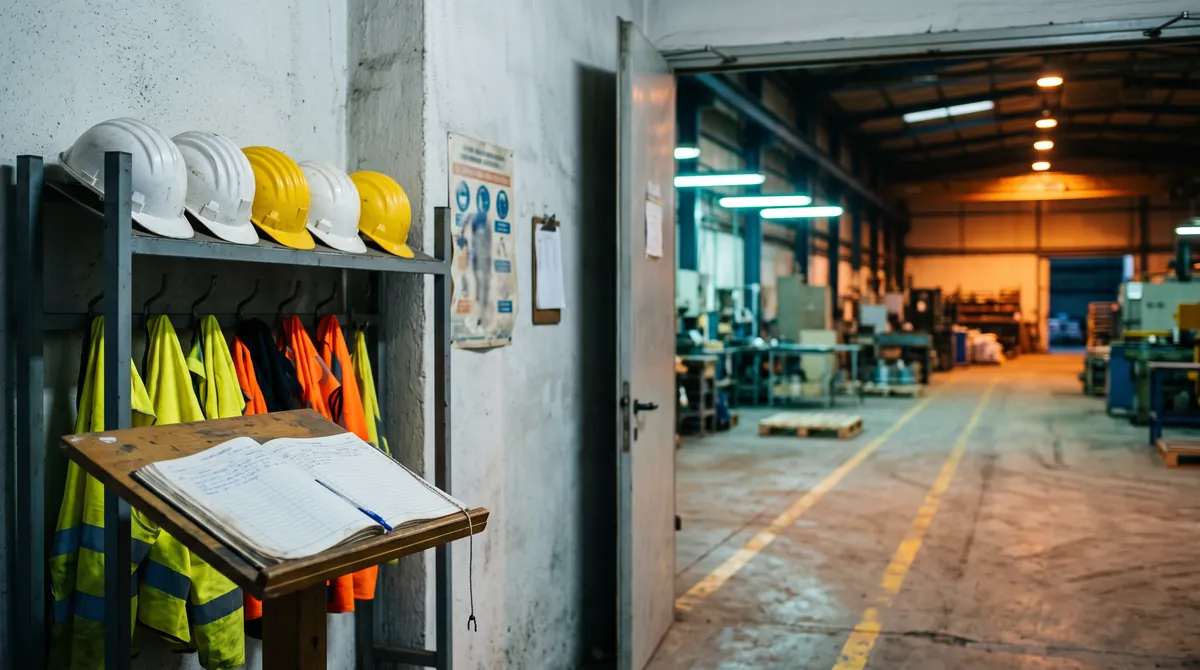
Ten days on your floor. Hard hat on.
An office inside the Almyros industrial area. Engineers who sit your safety induction before they set foot on the line. We measure energy, downtime, quality and paperwork, and leave you an opportunity map with the payback next to every line.
We come to you in Thessaly and Crete; we fix the date on the Scan call.
Definition
Plant X-Ray in Greek: Ακτινογραφία Μονάδας · noun
A Plant X-Ray is the Workflow X-Ray built for factories: ten working days on site that add energy and downtime data, quality logs and a camera feasibility test on one line to the process mapping, and end with an opportunity map with the payback calculated and a pilot charter with success thresholds.
The gap
Europe has already started.
The big players have started. Smaller firms are standing still. That's your opening.
Manufacturing: 7.77% of Greek firms with 10+ staff use AI, against 17.27% in the EU (2025).
- Food and beverage: 3.84% against 12.47% in the EU (2025). In 2024 Greece was ahead, 9.75% against 6.79%: a small sample, with big swings.
- Metals (basic and fabricated): 4.72% against 14.33% in the EU (2025).
- Rubber, plastics and non-metallic minerals (cement, glass, ceramics): 12.67% against 16.77% in the EU (2025).
- AI used in production itself: 1.88% of Greek firms with 10+ staff, against 4.14% in the EU (2025).
- Large Greek firms (250+ staff): from 24.27% to 37.58%. Small firms (10–49 staff): from 8.20% to 7.33% (2024 → 2025).
Figures from an official statistics body, with the year shown. Eurostat isoc_eb_ain2 and isoc_eb_ai, 2024–2025, firms with 10+ staff
Ten days on site
The days follow your shifts.
They can be spread over two or three weeks, so we see the night shift too, and the day the lorries load.
Plant X-Ray · D01–D10
| Day | Title | What we do | What we need from you |
|---|---|---|---|
| D01 | Safety and kick-off | We sit your safety induction. Kick-off with the owner, plant manager, maintenance and quality: the lines, assets and processes in scope. | Two hours from management and the department heads. |
| D02–D03 | Gemba walk with a stopwatch | We walk the line and the office. We time the flow from order to dispatch, the changeovers, the inspection. We photograph the paper: shift logs, maintenance work orders, HACCP sheets. | One person from the plant who knows where everything is. |
| D04 | Energy | Twelve months of bills, meter data or SCADA exports. Load profile, peaks, kWh per unit of output. | The bills, or read access to the meters. |
| D05 | Downtime and maintenance | Downtime logs and maintenance work orders, the critical assets, a baseline for MTBF and MTTR. And the 'Friday night' pattern, if there is one. | The logs, even if they're on paper or in Excel. |
| D06 | Quality | Scrap, rework, customer complaints, credit notes. A baseline for the defects that reach the customer. | An hour with the quality lead. |
| D07 | Camera test on one line | With a camera you already have, or a temporary one of ours: images of good and defective parts, labelled together with your quality lead. | Access to one line, at a time the shift supervisor chooses. |
| D08 | The flow, from the ERP | Lightweight process mining from the timestamps: order, production order, delivery note, invoice. Where the work waits, and where it gets retyped. | One export from the ERP. |
| D09 | Opportunity map | Every opportunity scored on value, feasibility and time to value, on a 2×2. Payback, risk, funding route, AI Act and GDPR class. | Nothing. This one's on us. |
| D10 | Readout and pilot charter | With the owner, the plant manager and the CFO. Numbers, the demo, and a pilot charter with success thresholds ready to sign. | Two hours, and a decision whenever you're ready. |
What we need
Six things. No PowerPoint.
If some of this doesn't exist, that's fine. The fact that it doesn't is already a finding.
- Twelve months of electricity bills, or meter data
- Downtime and maintenance logs, even on paper or in Excel
- Quality records: scrap, rework, customer complaints
- One ERP export: orders, production orders, delivery notes, invoices
- Access to one line for the camera test
- One person from the plant who knows where everything is
Safety
Safety first. Literally.
We sit your plant's safety induction before we go anywhere near the line.
We wear the personal protective equipment your plant specifies.
We don't touch PLCs, machine settings or electrical panels. We read data; we never write it.
Cameras only where we've agreed in writing, pointed at the product, not at people.
Photos of documents and premises only with permission, stored inside the EU.
The camera test
Can a camera see your defect?
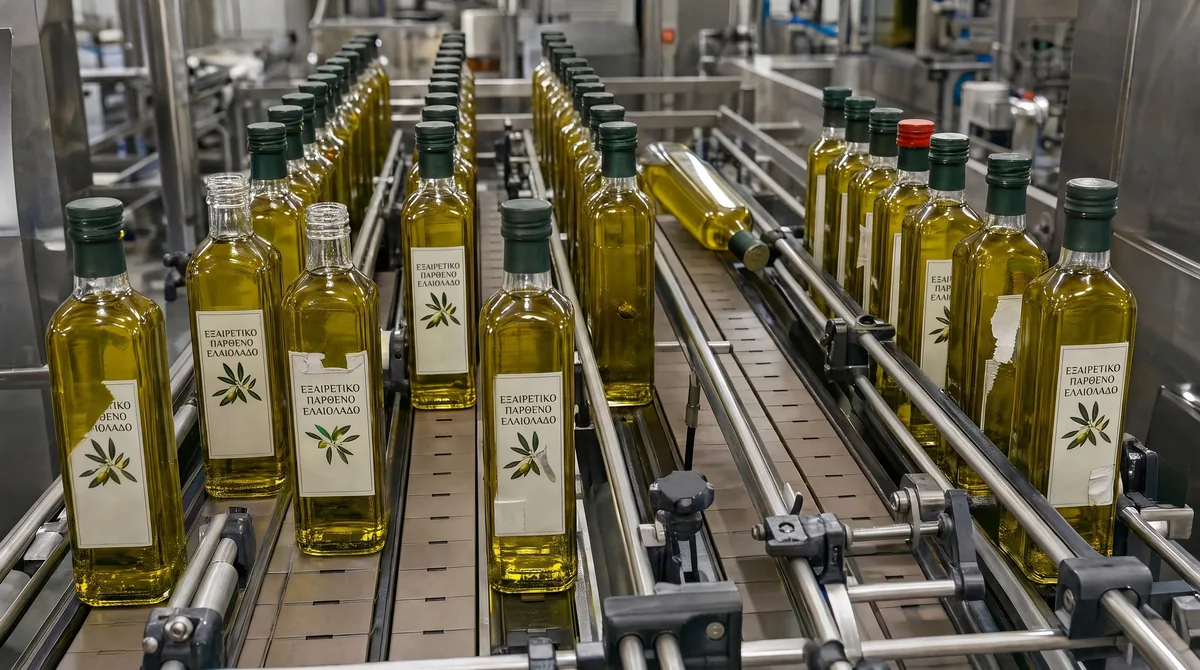
On one line, with a camera you already have or a temporary one of ours, we collect images of good and defective parts with your quality lead. We train a first model on your parts alone.
Then we tell you straight whether computer vision can see your defects under your lighting and at your line speed. Sometimes the answer is 'not yet'. We write that down too.
Drag the camera along the line, or use the arrow keys.
The three possible verdicts
- Feasiblethe defects are visible and the speed is workable.
- Feasible with changesit needs lighting, a different position or a different camera.
- Not yetthe defect doesn't show up in an image. We record that and move to the next opportunity.
Want a head start? Send us 20 photos of one defect from your line.
How to take them
- Shoot from where a camera would sit, at the same angle every time.
- Mix good parts with defective ones, about half and half.
- Use the line's normal lighting. No flash.
- Email them to info@netex.gr with the subject 'Vision test'.
What a Plant X-Ray finds
From cheese vat to CNC router.
A cheese dairy, a ready-mix plant, a bottling line, a furniture workshop. Different machines, one method. The figures are examples, with the working shown.
-
NTX · P01 · Cheese dairy · ThessalyUse case
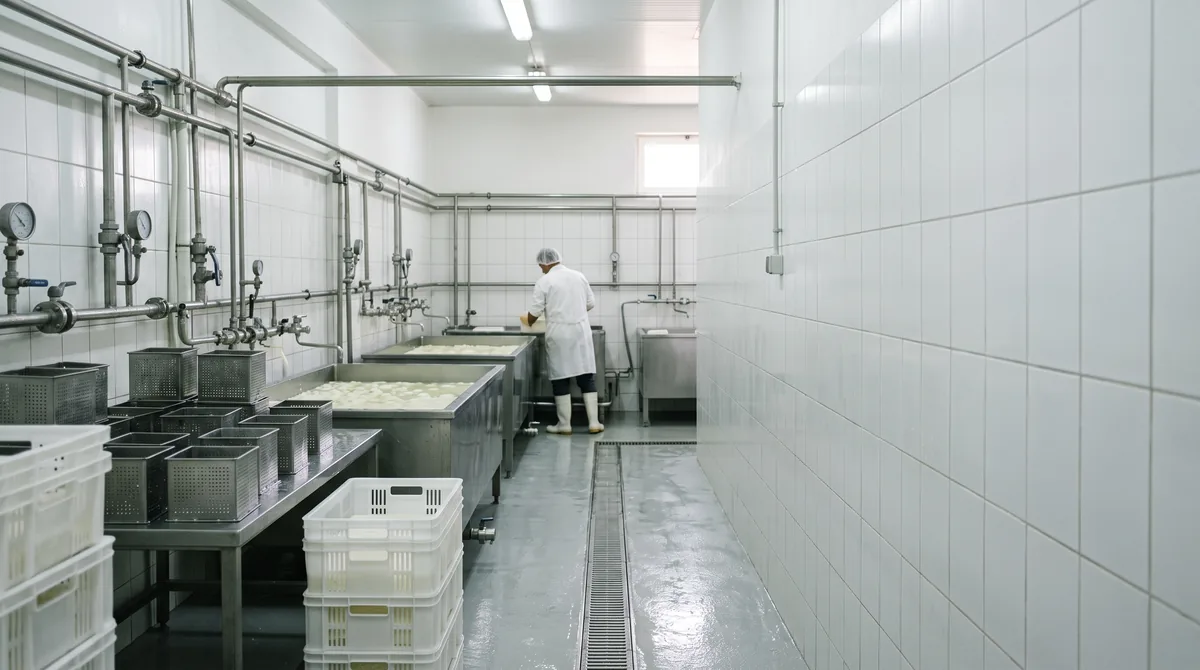
Cheese dairy Thessaly · 45 staff · 120 farmers
- The scene
- The milk arrives when it arrives. The cheesemaking plan is written each morning, by eye.
- What we time
- 3,600 milk-intake slips a month, a minute each in Excel. Settling 120 farmers' accounts by fat and protein, 20 minutes each. The morning plan, an hour a day for 26 days. Preparing for four audits a year, 40 hours each.
- Hidden load
- ≈ 139 hours a month · ≈ €30,400 a year (€18.20/hour, Eurostat). Cold-room energy is measured separately, in kWh per tonne.
- What the AI does
- Predicts
- The demo at the readout
- A year of your own milk-intake records turned into a day-by-day forecast for next week, plotted against what actually arrived.
- First pilot
- Milk-intake forecast → a suggested cheesemaking plan · slips and lab results read → farmer settlements · a HACCP assistant that shows what's missing before the audit.
- What stays human
- The cheesemaker decides the recipe and the plan. The AI touches no critical control point.
- What we measure afterwards
- forecast error (MAPE) · settlement hours · audit-prep hours · kWh per tonne
- Hours handed back
- ≈ 63–76 hours a month (slips 1 min → 0.4 min · settlements 20 min → 4 min · plan 1 hour → 20 min · audits 40 → 25 hours)Range: 70–85% of the theoretical saving, because not every task completes without a correction. The 'after' times already include human review.
-
NTX · P02 · Ready-mix · ThessalyUse case
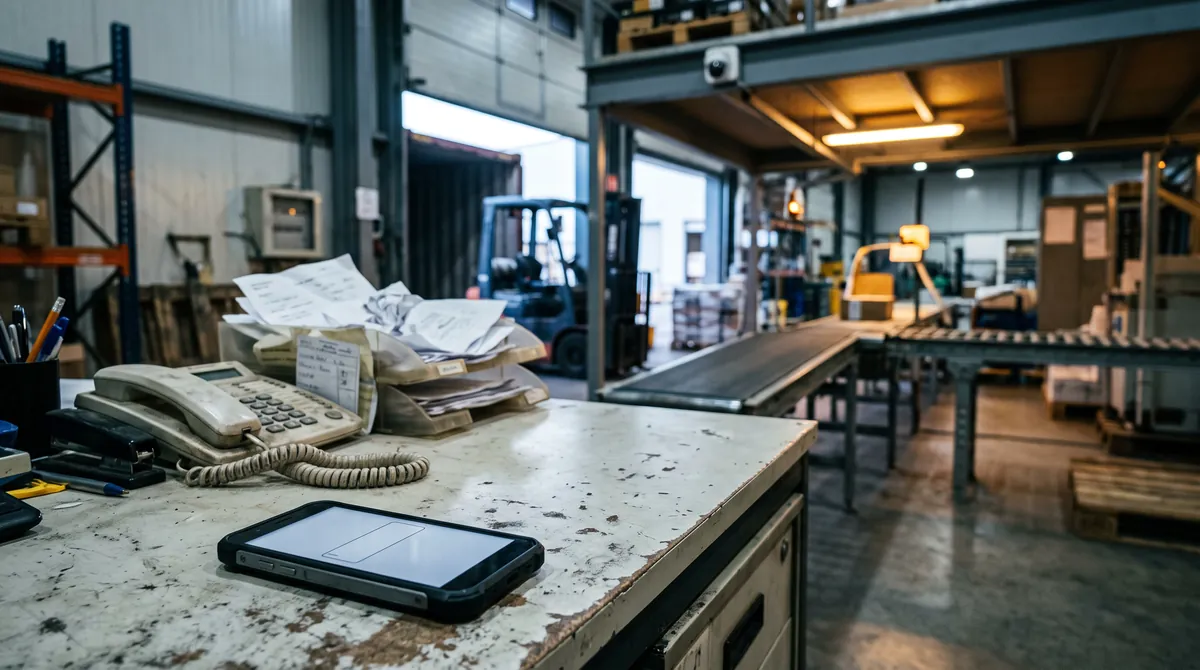
Ready-mix concrete plant Magnesia · two plants · 14 mixer trucks
- The scene
- Three mixer trucks are queuing at one site. The fourth is looking for the pump.
- What we time
- The dispatcher builds the day by phone and whiteboard, three hours a day, 22 days a month. 1,400 delivery tickets a month retyped for invoicing, 2 minutes each.
- Hidden load
- ≈ 113 hours a month · ≈ €24,600 a year (€18.20/hour, Eurostat). Truck waiting hours and returned cubic metres are measured separately.
- What the AI does
- Optimises
- The demo at the readout
- One week of your own delivery tickets replayed on a map: where the trucks waited, and how the same week would look in the order the model proposes.
- First pilot
- A loading and routing order built from pour times, pump availability and distance · delivery tickets read → invoicing.
- What stays human
- The dispatcher has the final say. The AI proposes an order; it doesn't give drivers instructions.
- What we measure afterwards
- waiting minutes per trip · returned cubic metres · trips per truck per day · minutes per ticket
- Hours handed back
- ≈ 47–57 hours a month, before we count the trucks (planning 3 → 1.5 hours a day · tickets 2 min → 0.5 min)Range: 70–85% of the theoretical saving, because not every task completes without a correction. The 'after' times already include human review.
-
NTX · P03 · Bottling · CreteUse case
Olive-oil bottling plant Crete · exports to six countries
- The scene
- The lot code on the label was wrong. The importer spotted it in Hamburg.
- What we time
- Label and lot checks by eye on one bottle in 50: half an hour a shift, two shifts, 22 days a month. 40 export shipments a month with certificates, lab analyses and buyer specs in three languages, an hour and a half each.
- Hidden load
- 82 hours a month · ≈ €17,900 a year (€18.20/hour, Eurostat), plus whatever pallets come back
- What the AI does
- Sees
- The demo at the readout
- Two minutes of video from your own line: every bottle checked for label, lot code and date, and the odd ones out flagged.
- First pilot
- An end-of-line camera checking label, lot and date on every bottle · draft export documents from the spec database, in three languages.
- What stays human
- The quality lead releases the batch. The AI raises the alarm; it doesn't decide. A person signs every export document.
- What we measure afterwards
- labelling errors per 10,000 bottles · hours per shipment · customer returns
- Hours handed back
- ≈ 40–49 hours a month (checks 22 → 4 hours · documents 1.5 → 0.5 hours per shipment)Range: 70–85% of the theoretical saving, because not every task completes without a correction. The 'after' times already include human review.
-
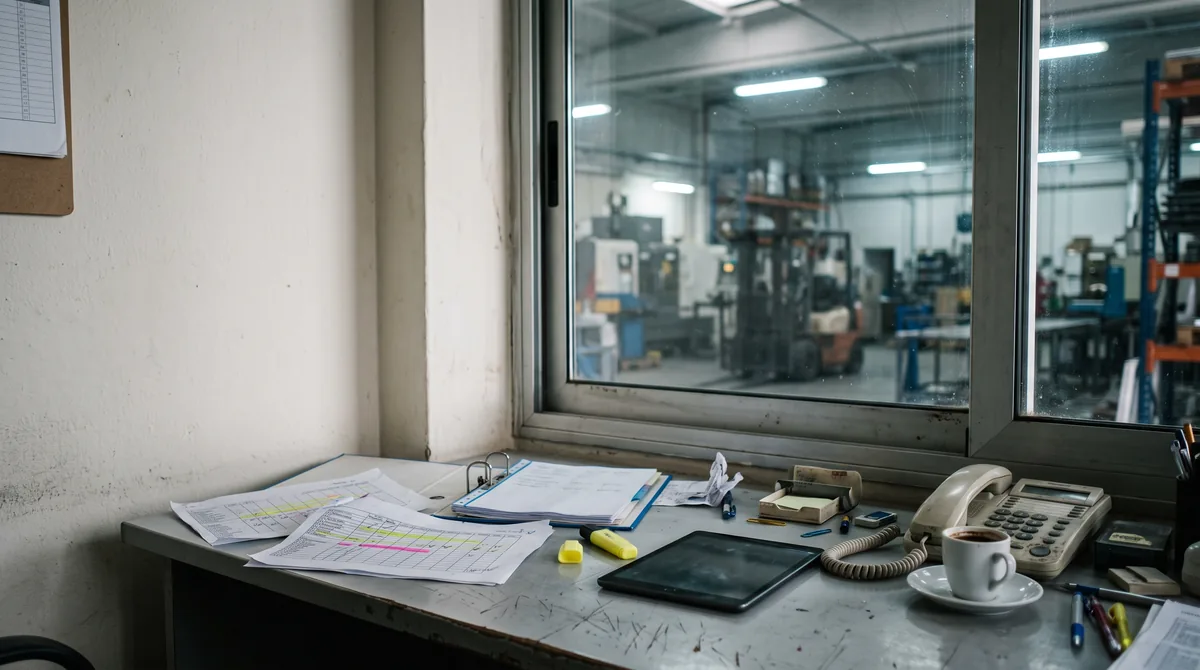
NTX · P04 · Furniture · CreteUse case
Furniture workshop with CNC Heraklion · 30 staff
- The scene
- Offcuts fill a skip every month. Nobody knows how many euros that is.
- What we time
- 60 quotes a month from architects' drawings, an hour and a half each. 100 orders a month whose cutting lists and sheet layouts are done by hand, 40 minutes each.
- Hidden load
- ≈ 157 hours a month · ≈ €34,200 a year (€18.20/hour, Eurostat). Offcuts are measured separately, in square metres and euros.
- What the AI does
- Reads · Optimises
- The demo at the readout
- Five of the drawings you've been sent turned into cutting lists and quotes with your own materials and prices, plus a second sheet layout showing the offcut before and after.
- First pilot
- Drawing read → cutting list → draft quote · layout optimised across the whole week's orders at once.
- What stays human
- A craftsman checks every cutting list before it reaches the CNC. The AI sends nothing to the machine on its own.
- What we measure afterwards
- minutes per quote · offcut square metres per sheet · time from drawing to quote
- Hours handed back
- ≈ 71–86 hours a month (quotes 1.5 → 0.5 hours · cutting lists 40 min → 15 min)Range: 70–85% of the theoretical saving, because not every task completes without a correction. The 'after' times already include human review.
No films match this filter. Try another, or show them all.
Plastics, metals, food and distribution: see their Process X-Ray on the Industrial AI page
What you get
Nine sheets for one decision.
NTX-PX · 01–09Plant X-Ray
- NTX-PX-01The plant's Hours-Leak Map, from the office to the line
- NTX-PX-02An energy baseline: kWh per unit of output, peak kW, cost per MWh
- NTX-PX-03A downtime and quality baseline: downtime hours, MTBF, MTTR, scrap, and OEE where it's measured
- NTX-PX-04A camera feasibility report for one line
- NTX-PX-05An opportunity map (value × feasibility) with payback and risk
- NTX-PX-06A demo on your own material
- NTX-PX-07A pilot charter with success thresholds, ready to sign
- NTX-PX-08A funding annex and an AI Act, GDPR and security checklist
- NTX-PX-09A readout for the owner, the plant manager and the CFO
Two formulas you'll see a lotNTX-PX
OEE = Availability × Performance × Quality
Downtime avoided = downtime hours avoided × cost per downtime hour
The cost of a downtime hour is yours: we measure it, we don't borrow it. For scale, Siemens reports that large plants lose about 27 hours a month to unplanned downtime. Siemens, True Cost of Downtime 2024 · vendor figure
Price and terms
From €4,900 + VAT
The final price depends on lines, shifts and buildings. We put it in writing after the Scan call, before you commit.
Request a plant visitCredited in full
Credited in full against a pilot signed within 60 days of the readout.
Minimum data, kept in the EU
An NDA before the first document. Read-only access to data. Processing inside the EU, deletion after the readout unless we carry on together.
Funding
Which programme covers what, if any does.
The Plant X-Ray's funding annex matches every line of the plan to whatever is open at the time, subject to the current call text. The investment is never designed to depend on a grant.
| Programme | Status |
|---|---|
| Development Law, 'Manufacturing – Supply Chain' scheme, cycle 4 | 2026 cycle; deadlines are checked in each X-Ray's annex. |
| €150M AI scheme for SMEs | Announced; the terms and the call date have not been published. |
| ESPA 'Advanced Digital Transformation of SMEs' | Approved beneficiaries are still implementing; the term was extended to 31 months. |
| Thessaly 'Αναπτύσσομαι έξυπνα' grants (70%) | Applications closed on 31 March 2026. If your project was approved, the annex shows what it can cover. |
| Loans through the Hellenic Development Bank | Available; current terms checked case by case. |
For information, not legal or tax advice. The call text always prevails.
Questions
What plant managers ask.
Will production stop?
No. We work beside the line, not on it. The camera test uses a camera mounted without touching the machine, at a time agreed with the shift supervisor. We don't touch PLCs, machine settings or panels, and we only ever read data.
We have no sensors and messy data. Can you still do it?
Yes. We start with whatever exists: electricity bills, shift logs, ERP exports, even paper. If an opportunity lacks data, the map says so, along with the cheapest way to start collecting it. Missing data is a finding, not a blocker.
What usually comes first afterwards?
The lowest-risk step that delivers a measurable result. That might be energy, quality control on one line, or the office paperwork. The opportunity map decides it with numbers, not our preferences. We earn trust with results first, then go deeper.
Do we need to buy cameras or sensors?
Not for the X-Ray. If you don't have a camera, we bring a temporary one for the test. If a pilot needs equipment, it goes on the map with its cost, and we check first whether the IP cameras and meters you already have will do.
What happens to the plant's data?
We sign an NDA before the first document. Access is read-only, processing stays inside the EU, and the camera-test images are used for the test alone. After the readout we delete the data, unless we carry on together and you ask us to keep it.
Do you travel outside Thessaly and Crete?
Our offices are inside the Almyros industrial area and in Heraklion, so that's where we're quickest. For plants elsewhere, we talk it through on the Scan call and spell it out in the proposal before you commit to anything.
Plant visit
Shall we come to your plant?
Three steps. On the Scan call we fix a date and put the price in writing.
Rather start with photos? Email 20 images of one defect to info@netex.gr with the subject 'Vision test'.